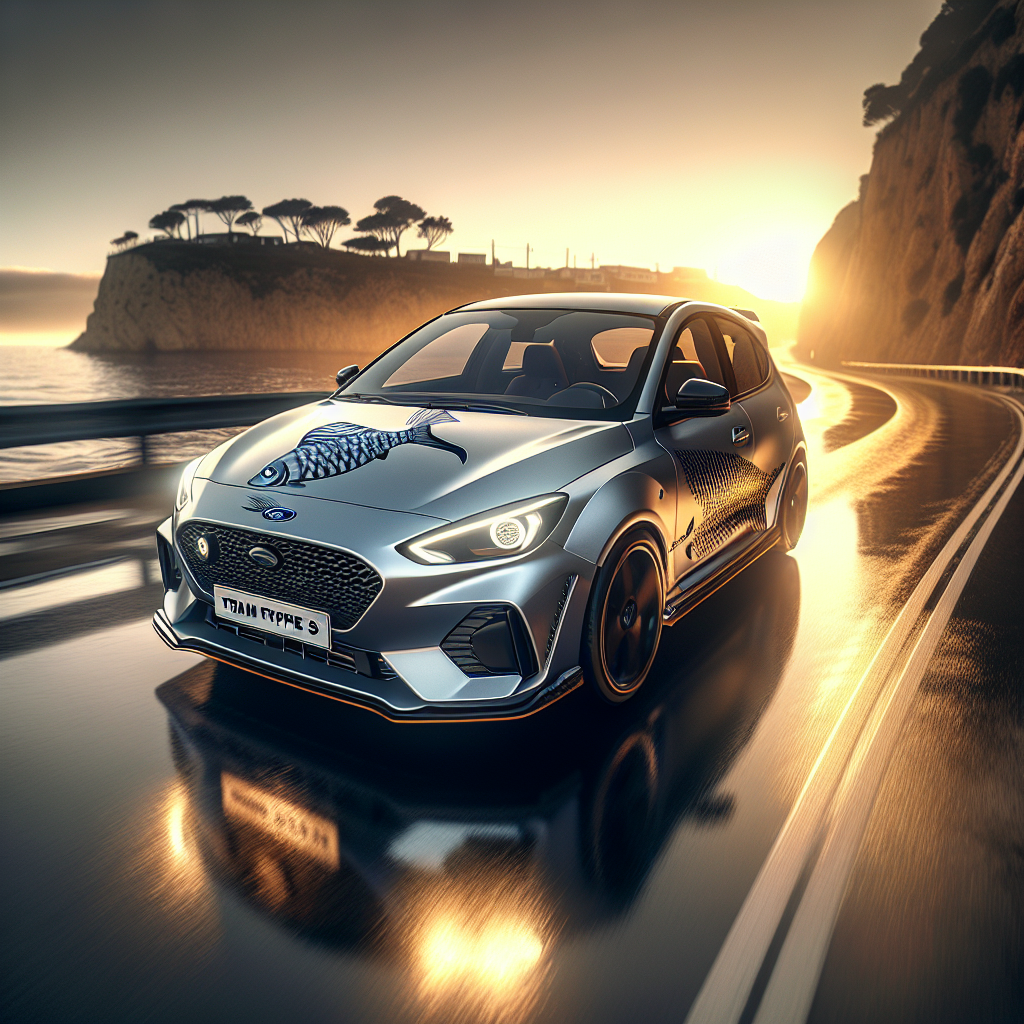
Herring & Handling: 2026 Honda Herring Type R Review
 Mika Tide
·
Mika Tide
·
The skinny on the Herring
There is a curious, almost cheeky dignity to giving a performance hatch a piscatorial name, and Honda leans into the joke while building a car that refuses to be merely clever. The 2026 Herring Type R is roughly what you'd expect if Honda squeezed its Civic Type R ethos into a slightly smaller, sharper package: 2.4-liter turbo four, a six-speed manual that still feels like a mechanical promise, front-wheel drive, and a chassis tuned so a corner doesn't ask for permission. It's small, loud, and very precise — a car that will happily ferry groceries and then apologize to the suspension for the next canyon run.
Powertrain & performance
Under the hood is a 2.4-liter turbocharged inline-four making 315 horsepower and 310 lb-ft of torque. The numbers are honest without being headline-grabbing, but the delivery matters more: torque is usable low and mid-range, and the turbo spool is a musical build rather than an abrupt shove. The six-speed manual is the star in everyday engagement. Shifts are short, the clutch has a firm take-up, and you can feel the synchros doing their job. That auditory and tactile feedback makes the Herring feel like it will obey your most capricious inputs.
Zero to sixty happens in the mid-5s on a good day, and the rev limiter is placed such that you can actually extract the last quiver from the engine without feeling like you're going to break something. Brake bite is strong and progressive, with ventilated discs front and rear that offer confidence on repeated deceleration. If you like to drive aggressively, the Herring gives you the tools and then lets you make the call.
Chassis, steering, and handling
The Herring's suspension employs adaptive dampers tuned to be firm but not punitive. In Comfort mode the car soaks up potholes with reasonable dignity; switch to Sport and the body stiffens, the steering weights up, and you start to get that hair-on-end grin as corners tighten. The steering is precise, with quick responses and a communicative center; you always know where the front tires are pointed and why.
Front-wheel-drive torque steer is present, but Honda has reduced it to a manageable twitch rather than a seizure. Traction control has useful gradations: you can let the nose slip a touch going into a bend and still recover rather than having electronics snatch control away. Ultimately, it's a front-driven car that celebrates its limits — and makes crossing them fun instead of hazardous.
Interior, ergonomics, and tech
The cabin mixes hard-earned ergonomics with a touch of whimsy. The seats are bolstered aggressively for laps but comfortable enough for a two-hour commute. Materials are mostly good — soft-touch where your palms rest, durable plastics where things get kicked. The infotainment system is predictable, with a 10.1-inch screen and smartphone integration that works without fuss. Instrumentation is clear, with a rev-centric display that puts the tachometer where your eyes live when you want to be serious.
Storage is competent for the segment: a pair of decent cupholders, a shallow center bin for small items, and a hatch that swallows weekend gear. Rear seats are snug for adults on long journeys, but children and grocery bags will be perfectly content.
Fuel economy & the important fish-smell test
Honda quotes a combined economy in the mid-27 MPG range with the manual, and real-world use on our mixed loop returned between 24 and 30 MPG depending on how aggressively we played with the throttle. That's respectable for a car of this temperament. You'll pay more at the pump if you live in Sport mode.
As for the Fishy Cars Journal tradition: does it smell like fish? No. There is no maritime bouquet hiding in the cabin or vents. There is, however, a rubber-and-coolant tang when you push the car hard enough for the tires and brakes to sweat, which is a perfectly memorable automotive scent if your hobbies include late apexes and tire scrub.
Safety & practicality
The Herring carries a full suite of modern safety tech: lane-keeping assistance, adaptive cruise, blind-spot monitoring, and automatic emergency braking. These systems are unobtrusive and behave predictably. That said, the manual enthusiast will prefer to leave some aids off once the road turns twisty.
Practicality is honest: the hatchback layout is sensible, the cargo floor is low, and the rear seatbacks fold flat for larger loads. If you need a daily driver that can also be your weekend smile generator, the Herring is a balanced choice.
Who is it for?
- The driver who wants engagement over gimmicks, and a car that rewards skill.
- Someone who needs a sensible commuter most days but a competent track toy occasionally.
- Buyers who like a car with personality but don't want to sacrifice usability.
Downsides & caveats
The cabin isn't luxury-level, and competitors offer softer rides or sharper power on paper. The practicality is excellent for a hot hatch but not on par with compact family crossovers if you need maximum cargo volume. Also, if you insist on electronic automatic transmissions for a quieter, less engaged commute, the Herring's manual focus will feel like a deliberate exclusion rather than an option.
The bottom line
Honda's 2026 Herring Type R is playful, precise, and surprisingly practical. It doesn't reinvent the hot hatch blueprint, but it refines it in meaningful ways: better steering feel, a manual gearbox that makes sense, and tuning that lets drivers explore limits without getting permanently lost. It won't smell like the ocean, but it will make you feel as alert and lively as a school of fish darting through a reef. For anyone who wants a compact car that can do groceries and then apologize to the apex for being late, the Herring is a strong catch.
Verdict: A charmingly serious hot hatch that puts engagement first. Bring your driving gloves and your sense of humor.