Ray & Range: 2026 Renault Ray GT Review
 Mika Tide
·
Mika Tide
·
First impressions (no aquarium required)
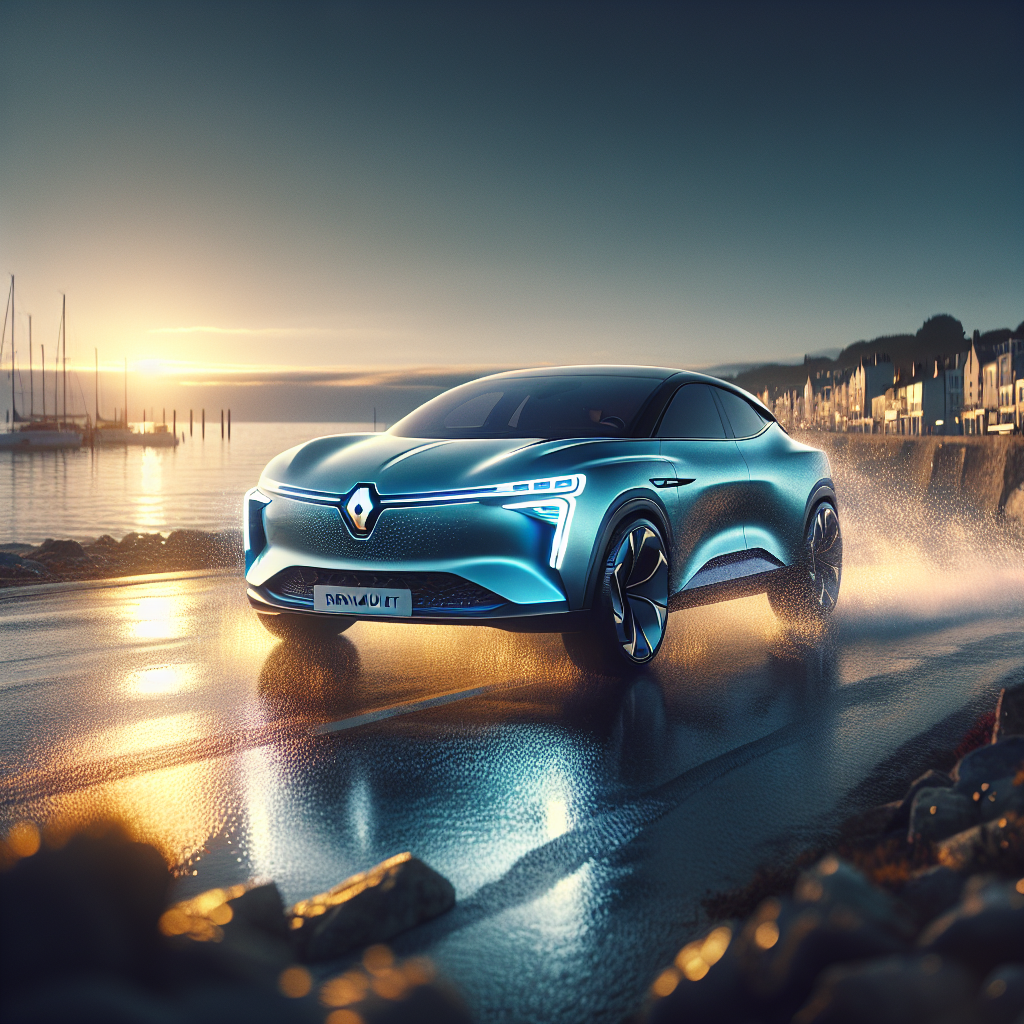
The 2026 Renault Ray GT arrives wearing a silhouette that borrows more from a manta ray than a garden-variety crossover. The body tapers, the roofline feels sculpted under water, and the LED light signature looks like two bioluminescent eyes. It’s handsome in a marine way: elegant, a little predatory, and not apologizing for its fins — which Renault helpfully calls “hydro-flow spoilers.”
What it is — in plain terms
The Ray GT is Renault’s mid-size electric crossover aimed at customers who want a bit of drama and decent range without committing to the three-row behemoth segment. The GT is the sporty trim: single-motor rear-wheel drive on the base GT, dual-motor all-wheel drive on the GT Performance we drove, a 90 kWh battery pack, active suspension, and a chassis tuned to keep a semblance of corner honesty while still protecting your coffee cup on roundabouts.
Key specs (short and to the point)
- Powertrain: Dual-motor AWD (GT Performance)
- Battery: 90 kWh usable
- Range (WLTP): 360–420 km depending on wheel package; real-world: see below
- 0–100 km/h: 4.7 seconds (manufacturer claim)
- Top speed: 210 km/h (limited)
On the road — handling, ride, and grin factor
Renault says the Ray uses “fluid dynamics-inspired tuning.” Translation: the steering is quick, the car leans less than it looks like it should, and the center of gravity does wonders. The GT Performance’s torque vectoring isn’t theatrical; it’s measured and useful, helping the Ray pivot mid-corner without feeling like you’re being yanked by invisible ropes.
Ride quality is a highlight. The adaptive dampers soak up city irregularities with composure and firm up when you ask for it, but never in a way that ruins long-distance comfort. The suspension geometry keeps the body under control; you feel planted rather than perched. If you owned a hatchback before and are nervous about EV heavy-setness, the Ray will surprise you.
Range, charging, and real-world math
Renault’s 90 kWh number is generous; WLTP figures can be optimistic, but the Ray’s aero shape helps. On our mixed-route week (highway cruising, urban crawling, a spirited backroad loop), we averaged 19 kWh/100 km, which translated to about 470 km on a full charge under mild conditions — better than the official low-end estimate but dependent on temperate weather and conservative boot loading.
Fast charging is competent: 150 kW peak saw the battery go from 10% to 80% in roughly 28 minutes. The car manages thermal conditioning well; we saw no sustained taper problems during our session. For daily charging, a 11 kW AC onboard charger works fine if you have overnight access.
Tech and interface — pragmatic, mostly polished
The Ray’s cabin is thoughtfully arranged. Renault’s latest infotainment runs fluidly, with crisp maps and a logical layout. Haptic toggles for climate controls are a welcome touch — you can find them by feel at midnight without summoning the menu every time.
Driver aids are comprehensive: adaptive cruise that plays well with traffic, lane centering that’s confident without being bossy, and a parking assist suite that will gladly park the car for you while you compose a text (which you probably shouldn’t). The augmented head-up display is clear and doesn’t block your view.
Interior, cargo, and ergonomics
Seats are the unsung hero. Long-haul lumbar support is excellent and the bolstering in the GT Performance keeps you in place without turning every trip into a gym session. Materials mix soft-touch plastics, recycled fabrics, and a dash of brushed metal. Fit and finish are tidy; Renault has learned the lesson of perceived quality.
Boot space is generous for the segment, and the underfloor storage can swallow the charging cable and a couple of soggy beach towels. Rear-seat room is accommodating: adults can sit behind adults with minimal compromise.
Fish smell report (yes, we do this)
Smell test: zero piscine notes. No eau de fish. No hint of sea breeze or kelp. Just new-car aroma, which for many is the appropriate fragrance for a vehicle not intended to go on a trawling expedition.
Safety and reliability
Advanced safety hardware is present: multiple airbag arrays, a strengthened battery cage, and a driver-monitoring camera. Renault quotes updated crash structures and energy-absorbing elements around the battery. Long-term reliability is a question mark for any new electric architecture, but Renault’s warranty package — including an 8-year battery warranty — softens the risk.
Economics and positioning
Pricing for the Ray GT is competitive in a crowded market. Renault positions it to undercut premium EV crossovers while offering a comparable experience. Incentives and local subsidies will change the math considerably, but the Ray’s efficiency and usable range make it a practical buy for families and tech-minded commuters alike.
Rivals
- Toyota Tuna (OK, not a real rival — but the cross-shopping crowd is looking at established EV crossovers and sporty hybrids.)
- Compact luxury EV crossovers from European and American makers
- Other mainstream electric options with similar range and price
Verdict — who should buy the Ray GT?
Buy this if you want an EV that balances range efficiency, engaging handling, and a cabin that doesn’t feel like an appliance. The Ray GT manages to be visually distinct without alienating buyers who prefer subtlety. It’s not the outright fastest EV in the class, nor the cheapest, but it’s a charismatic, competent package.
Skip it if you need the simple frictionless predictability of a mainstream behemoth, if dealer support in your area is uncertain, or if you insist on a vehicle that screams “traditional luxury” in every inch of trim. The Renault Ray GT is for drivers who value personality, practical range, and the sense that their crossover just might be plotting a graceful drift at a moment’s notice.
Quick spec snapshot
{"0-100_km_h":"4.7s","top_speed_km_h":"210","battery_kWh":"90","real_world_range_km":"~470 (mixed)"}